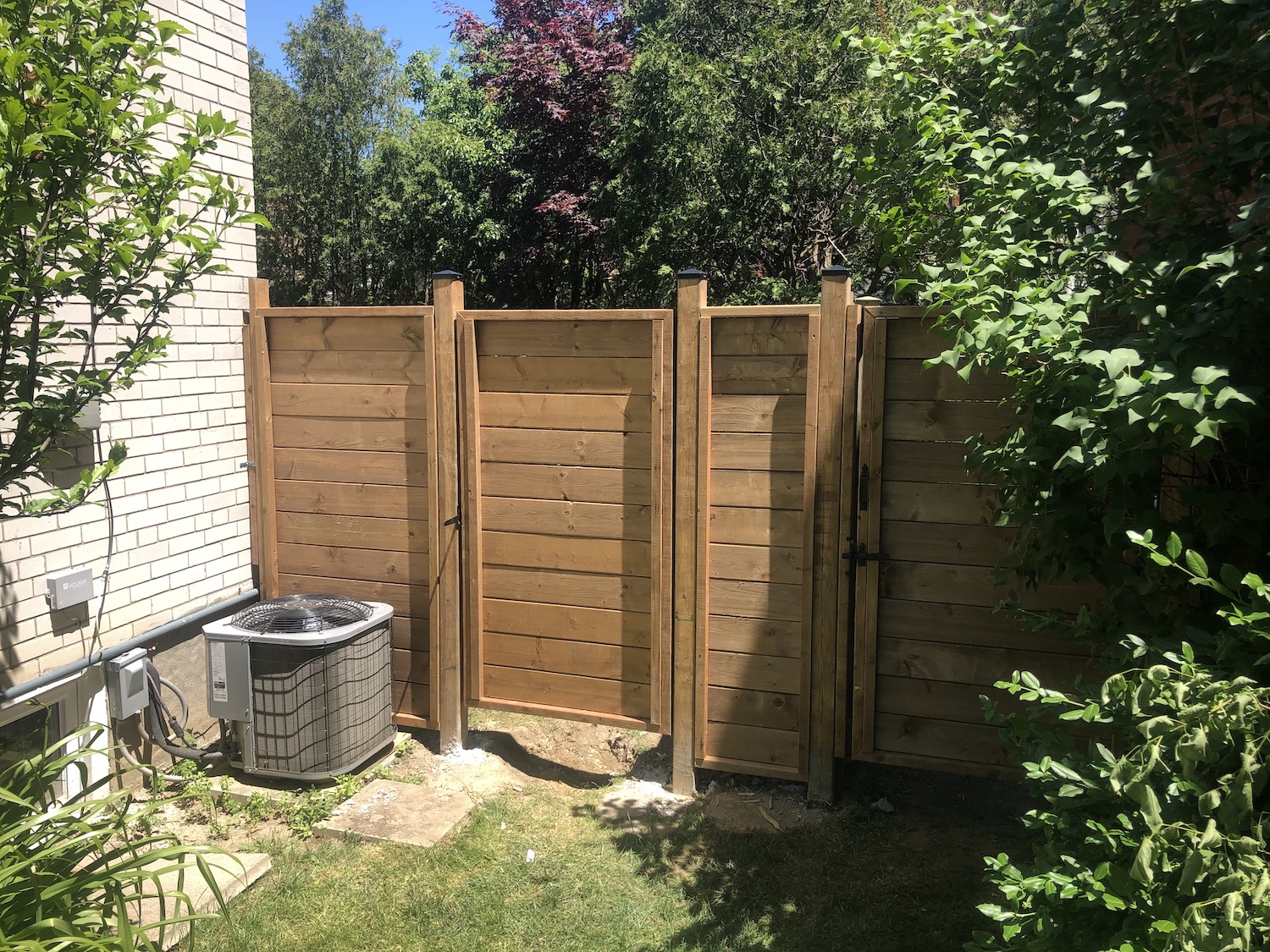
If you are pricing a new fence in Toronto this year, the range of quotes you receive can be bewildering — one contractor says $40 a foot, the next says $120 for what sounds like the same job. At Deck Master Inc., we have been building fences across Toronto and the GTA since 2004, and the honest answer is that both numbers can be correct depending on the material, the site, and what is hidden below the grade. This guide breaks down realistic 2026 installed pricing by material, explains what actually drives the cost, and walks you through the City of Toronto fence by-law so you can budget with confidence rather than guesswork.
2026 Fence Installation Costs in the GTA by Material
The single biggest lever on your budget is the material you choose. The figures below reflect fully installed pricing — labour, posts, concrete footings, fasteners, and standard hardware — for a straight run on reasonably level ground in the Toronto area. They are the ranges we quote most often in 2026, and they assume professional installation to code rather than a DIY weekend job.
| Fence type | 2026 GTA cost per linear foot (installed) | Lifespan | Maintenance |
|---|---|---|---|
| Pressure-treated wood | $35 – $60 | 15 – 20 years | Stain/seal every 2 – 3 years |
| Cedar | $55 – $95 | 20 – 30 years | Stain every 3 – 4 years to hold colour |
| Composite | $90 – $160 | 25 – 30+ years | Minimal — occasional rinse |
| Aluminum | $70 – $130 | 30+ years | Very low — no rot or rust |
| Chain link | $25 – $45 | 15 – 20 years | Low — occasional inspection |
Use these as planning numbers, not final quotes. A short, straight backyard run lands at the low end; a tall privacy fence on a sloped corner lot with multiple gates sits at the top. For a deeper side-by-side of the three most popular options, our wood vs. composite vs. aluminum comparison goes further into the trade-offs.
What Actually Drives Your Fence Cost
Two neighbours can order the same cedar fence and pay wildly different amounts. Here is where the money goes beyond the per-foot material rate.
Height
A 6-foot privacy fence uses more material and taller posts than a 4-foot fence, and it needs deeper, stronger footings to resist wind load. Going from 5 feet to 6 feet typically adds 10 – 20% to the linear-foot price.
Grade and slope
Flat ground is fast. A sloped or terraced yard requires stepping or racking the panels, extra posts, and more labour to keep the top line clean. Rocky or clay-heavy soil — common across the GTA — slows down post digging and raises cost.
Post footings
In our climate, footings are everything. Posts should be set below the frost line — generally 1.2 metres deep in the Toronto area — in concrete, so the fence does not heave and lean after the first hard winter. Cutting corners here is why so many "cheap" fences fail within a few seasons.
Gates, corners, and end posts
Every gate is a small engineering project — reinforced posts, hinges, and latches — and typically adds $250 – $600 each. Corner posts, end posts, and step-downs also add materials and time that a simple per-foot estimate hides.
Old-fence removal
Tearing out and disposing of an existing fence, including digging out old concrete footings, commonly adds $8 – $15 per linear foot. It is real work, and a legitimate quote will line-item it rather than bury it.
The Toronto Fence By-Law: What You Can Build
Before you fall in love with a design, know the rules. The City of Toronto's fence by-law sets height limits by location on your property. In general, a fence in a rear or side yard can be up to 2 metres tall, while a front-yard fence is limited to roughly 1.2 metres so sightlines at the street stay safe. Corner lots have additional visibility restrictions near driveways and intersections, and pool enclosures have their own separate requirements.
Most standard residential fences at or below these heights do not require a building permit, but anything taller, structural, or tied to a deck may. When you are unsure, confirm directly through the City of Toronto building permit page, and note that structural elements are governed by the Ontario Building Code. As a WSIB-insured firm, we build to these standards as a matter of course — not as an upsell.
Shared fences and property-line etiquette
A fence on the boundary between two properties is generally a shared responsibility under Ontario's Line Fences Act, so it pays to talk to your neighbour before the crew arrives. Confirming the property line — ideally against your survey — prevents the single most expensive fence mistake: building in the wrong place and having to move it.
Choosing the Right Material for Your Yard
Price is only half the decision; the other half is how the fence lives with you for the next two decades.
Pressure-treated and cedar deliver classic warmth and the lowest entry cost, and they remain our most-requested option — see our wooden fence installations for the range. Wood does ask for periodic staining to fight our freeze-thaw cycles. Composite costs more up front but effectively erases maintenance and holds its colour, which many homeowners find pays off over 25+ years; our composite fencing is popular with busy families. Aluminum suits sloped and pool-adjacent yards beautifully because it racks with the grade and never rusts — explore aluminum fencing if you want a slim, modern profile. Whatever you choose, you can browse finished projects in our project gallery to see how each material weathers in real GTA yards.
How privacy screens differ from a full fence
A full fence encloses your property line. A privacy screen is a targeted, freestanding panel that blocks a specific sightline — a hot tub, a patio, or an overlooking upstairs window — without wrapping the whole yard. Screens are usually shorter runs, often built in composite or aluminum for a refined look, and they are the smarter spend when you only need privacy in one spot rather than 150 feet of enclosure.
Frequently asked questions
How much does a typical backyard fence cost in Toronto in 2026?
For an average GTA backyard of roughly 120 – 150 linear feet, a pressure-treated fence runs about $5,000 – $9,000 installed, cedar about $8,000 – $14,000, and composite or aluminum $12,000 – $22,000. Removal of an old fence and gates are added on top.
Do I need a permit to build a fence in Toronto?
Most residential fences within the by-law height limits — up to 2 m in the rear and side yards — do not need a permit. Taller fences, pool enclosures, and any fence attached to a deck or structure may, so confirm with the City before you build.
What is the cheapest fence that still lasts?
Pressure-treated wood offers the lowest installed cost with a genuine 15 – 20 year lifespan, provided the posts are set in concrete below the frost line and it is stained every few years. Chain link is cheaper still but offers no privacy.
How long does installation take?
A standard backyard fence usually takes our crew two to four working days, depending on length, gates, and removal. Sloped lots and custom designs run a little longer.
Deck Master Inc. is a 3-time HomeStars "Best of" winner and a Home Depot Pro partner with a 5.0 rating, and we would be glad to give you a firm, itemized quote for your property. Contact us or call 647-349-6585 to book your free on-site estimate.