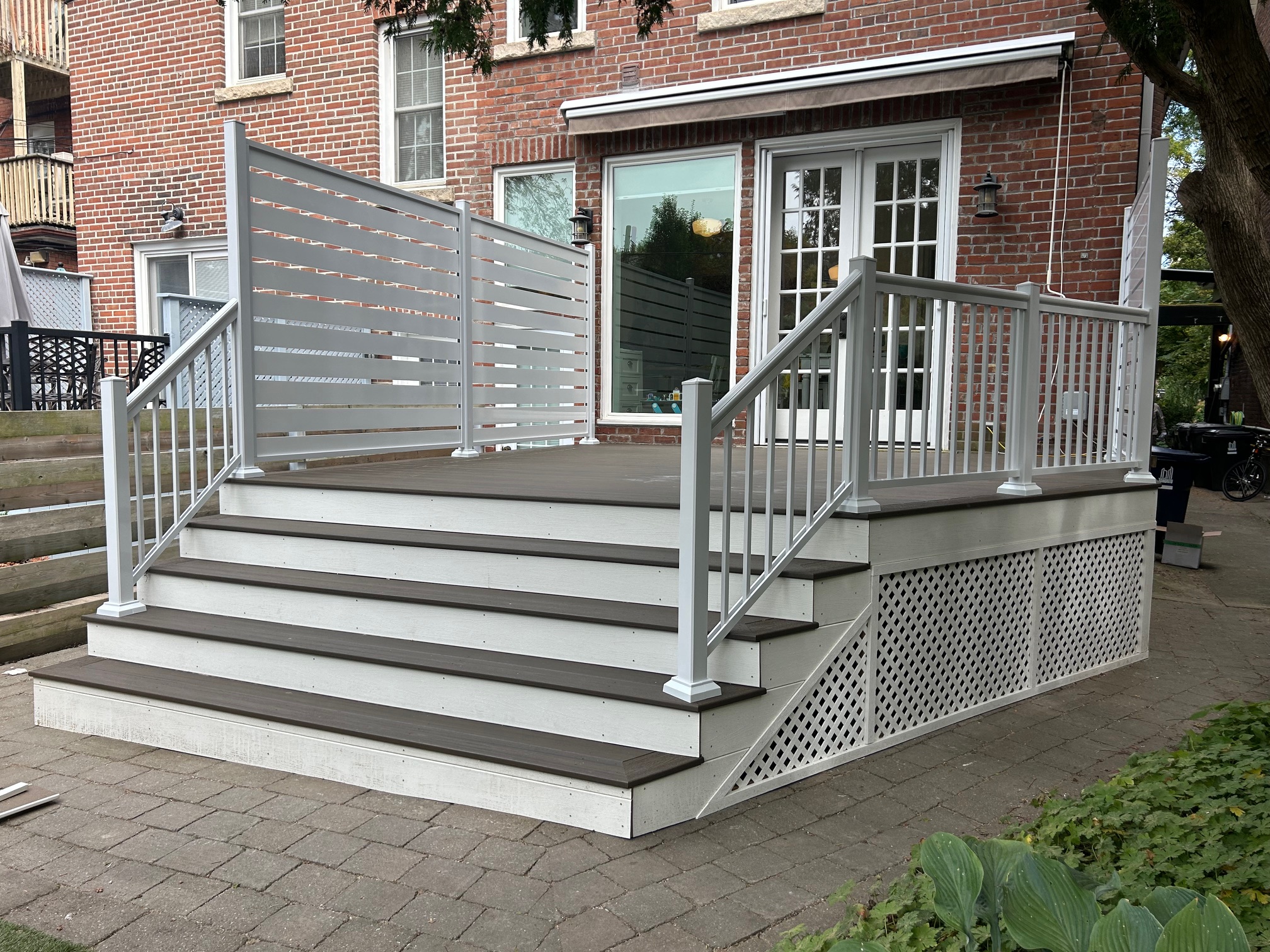
Planning a new deck for your Toronto or GTA backyard in 2026? The good news is that today's designs are working harder than ever, blending outdoor living, low upkeep and real curb appeal into a space you'll actually use from the first patio-season weekend to the last crisp evening in October. Below are the deck design trends we're seeing most across GTA homes right now, with practical notes on why each one makes sense for our lots, our climate and our lifestyles.
1. Warm greige and earthy composite tones
The cool grey decks that dominated the last decade are giving way to warmer, more natural palettes: greige (that friendly grey-beige middle ground), soft driftwood browns, weathered walnut and clay-toned reds. These shades feel grounded against GTA landscaping and read as timeless rather than trendy, so your deck won't look dated in five years.
Multi-tonal boards are a big part of this shift. Instead of one flat colour, premium composite lines now feature streaking and variegation that mimic real hardwood grain. Manufacturers like Trex and TimberTech offer these earthy, multi-tonal collections, and the effect on a finished deck is surprisingly rich. If you love the look, our composite decking service walks you through the colour options that hold up best under Ontario sun and snow.
2. Multi-level and 'zoned' decks
One of the strongest trends for 2026 is treating your deck like an outdoor floor plan rather than a single platform. A zoned deck carves the space into purpose-built areas: a raised dining zone off the kitchen door, a sunken lounge with a firepit, and a separate landing for a hot tub or cold plunge. Changing levels does the work of walls, defining each zone without closing off the yard.
This approach is especially useful on the sloped and split-grade backyards common across Scarborough, Vaughan and the Durham Region, where a single flat deck often isn't practical anyway. For a deeper look at how tiers can turn an awkward grade into an asset, see our guide to multi-level deck designs for sloped GTA backyards.
3. Frameless glass and cable railings for open views
Nothing modernizes a deck faster than swapping bulky pickets for a railing that gets out of the way. Frameless tempered-glass panels and slim horizontal cable systems keep sightlines clear, which matters on a raised deck where you want to see the garden, the ravine or the kids in the yard below.
Glass is the go-to for a clean, contemporary look and for blocking wind on exposed lots, while black aluminum-framed cable railings suit transitional and modern-farmhouse homes. Both are code-compliant for GTA height requirements and far easier to keep clear of snow than traditional spindles. Explore the options on our glass railing page to see what fits your view.
4. Integrated low-voltage LED lighting
Built-in lighting has moved from luxury add-on to near-standard, and for good reason: in our climate, thoughtful lighting doubles the hours you can enjoy a deck. The current look is subtle and layered rather than floodlit, using low-voltage LEDs recessed into stair risers, tucked under railings and capped on posts.
Because it's planned into the framing, integrated lighting looks clean and stays out of the way, with no cords or solar stakes to fuss over. It also adds a real safety margin on stairs during those dark, early GTA winters. For inspiration on layering the effect, our roundup of deck lighting ideas for Toronto outdoor spaces is a great starting point.
5. Built-in benches, planters and storage
On a typical GTA lot, every square foot counts, so 2026 designs are building furniture right into the deck. Perimeter benches provide seating without crowding the floor, integrated planters bring greenery up to eye level, and bench seats that lift open give you weatherproof storage for cushions, tools and pool supplies.
Built-ins also help define zones (see trend two) and create a finished, architectural look you can't get from patio furniture alone. Matching the composite of your deck boards keeps everything cohesive and low-maintenance.
6. Pergolas and louvered shade structures
With GTA summers running hotter and longer, shade has become a design priority rather than an afterthought. Classic wood and aluminum pergolas remain popular for their structure and vertical interest, but the standout trend is the motorized louvered roof: adjustable aluminum blades that you tilt for filtered light, close for a sudden downpour, or open fully on a perfect July evening.
A shade structure also extends your usable season, keeping a dining or lounge zone comfortable through midday heat. Our pergola and shade structure options range from simple shade sails to fully louvered, rain-ready roofs.
7. Outdoor kitchens and dining
The backyard barbecue has grown up. GTA homeowners are increasingly building dedicated cooking and dining zones with built-in grills, side burners, prep counters, storage and even weatherproof fridges, all framed by durable composite and stone. Positioning the kitchen near the house keeps plumbing and gas runs short, while a covered pergola overhead makes it usable in light rain.
Done well, an outdoor kitchen turns your deck into the default gathering spot for half the year. For layout ideas that balance cooking, seating and flow, see our post on outdoor kitchen and deck combinations.
8. Mixed materials: composite, aluminum and wood accents
Single-material decks are giving way to layered, designer-style combinations. A durable composite floor pairs with a black aluminum railing frame, warm cedar or ipe accents on a privacy wall, and stone or porcelain on a lower patio. The mix adds texture and lets you place natural wood only where it's protected and easy to maintain, rather than underfoot where it weathers fastest.
This is a smart, practical trend for our climate: you get the character of wood accents without committing your whole deck to annual sanding and staining.
9. Privacy screens for close GTA lots
Infill neighbourhoods, narrow lots and two-storey neighbours are a fact of life across much of the GTA, so privacy has become one of the most-requested deck features. Modern screens are far from the old lattice look: think slim horizontal composite slats, laser-cut metal panels, frosted glass or living green walls that block sightlines while still looking intentional.
The trick is placing screens strategically, shielding a hot tub or lounge zone without boxing in the whole deck. Our privacy screen designs are built to coordinate with your railings and decking for a seamless result.
10. Low-maintenance everything
Tying all of these trends together is a clear priority: GTA homeowners want to spend weekends enjoying their decks, not maintaining them. Capped composite boards resist fading, staining and scratches; aluminum railings never need painting; and quality LED lighting runs for years. Given our freeze-thaw cycles, road salt and humid summers, materials that shrug off the weather simply last longer and look better.
Low-maintenance doesn't mean no-personality, though. The 2026 palette and mixed-material looks prove you can have warmth and style without the upkeep. If a fully engineered, worry-free build is your goal, our composite deck builder team in Toronto can spec it end to end.
Trends at a glance
| Trend | Why it works in the GTA |
|---|---|
| Warm greige and earthy tones | Timeless against Ontario landscaping; multi-tonal boards hide wear and pollen. |
| Multi-level, zoned decks | Turn sloped and split-grade GTA backyards into defined, usable rooms. |
| Glass and cable railings | Keep views open and shed snow more easily than spindles. |
| Integrated LED lighting | Extends usable hours through dark, early GTA winters and adds stair safety. |
| Built-in benches and planters | Maximize seating and storage on compact urban lots. |
| Pergolas and louvered roofs | Manage hotter, longer summers and rain without losing patio time. |
| Outdoor kitchens | Create a season-long gathering hub close to the house. |
| Mixed materials | Add wood character where it's protected, keeping upkeep low. |
| Privacy screens | Block close neighbours and create a retreat on tight infill lots. |
| Low-maintenance builds | Stand up to freeze-thaw, salt and humidity with minimal effort. |
Frequently asked questions
What is the most popular deck colour for 2026?
Warm, earthy tones are leading the way: greige, driftwood brown and weathered walnut, often in multi-tonal boards that echo real hardwood. These shades feel current without being trendy, and they pair well with both modern and traditional GTA homes.
Is composite or wood better for a Toronto deck?
For most homeowners, capped composite is the better long-term choice in our climate. It resists fading, staining and the freeze-thaw swings we get across the GTA, and it never needs sanding or staining. Many 2026 designs still use real wood as accents on privacy walls or pergolas, where it's easier to protect and maintain.
How much can a zoned, multi-level deck add to my project?
It varies with size, grade, railings and features like lighting or a hot tub landing, so the best path is a site visit and a detailed quote. Multi-level designs often make the most of a sloped yard that would otherwise be hard to use, which many homeowners find well worth the investment.
Do I need a permit for a new deck in the GTA?
Often yes, depending on height, size and your municipality's bylaws, since requirements differ between Toronto, Mississauga, Markham and other areas. As a WSIB-insured builder working across the region since 2004, we handle permit guidance and build to code as part of the process.
Ready to bring one of these trends to life in your own backyard? Browse our project gallery for real GTA decks we've built, then contact Deck Master or call 647-349-6585 to book a design consultation. We'll help you turn 2026's best ideas into a deck you'll love for years.