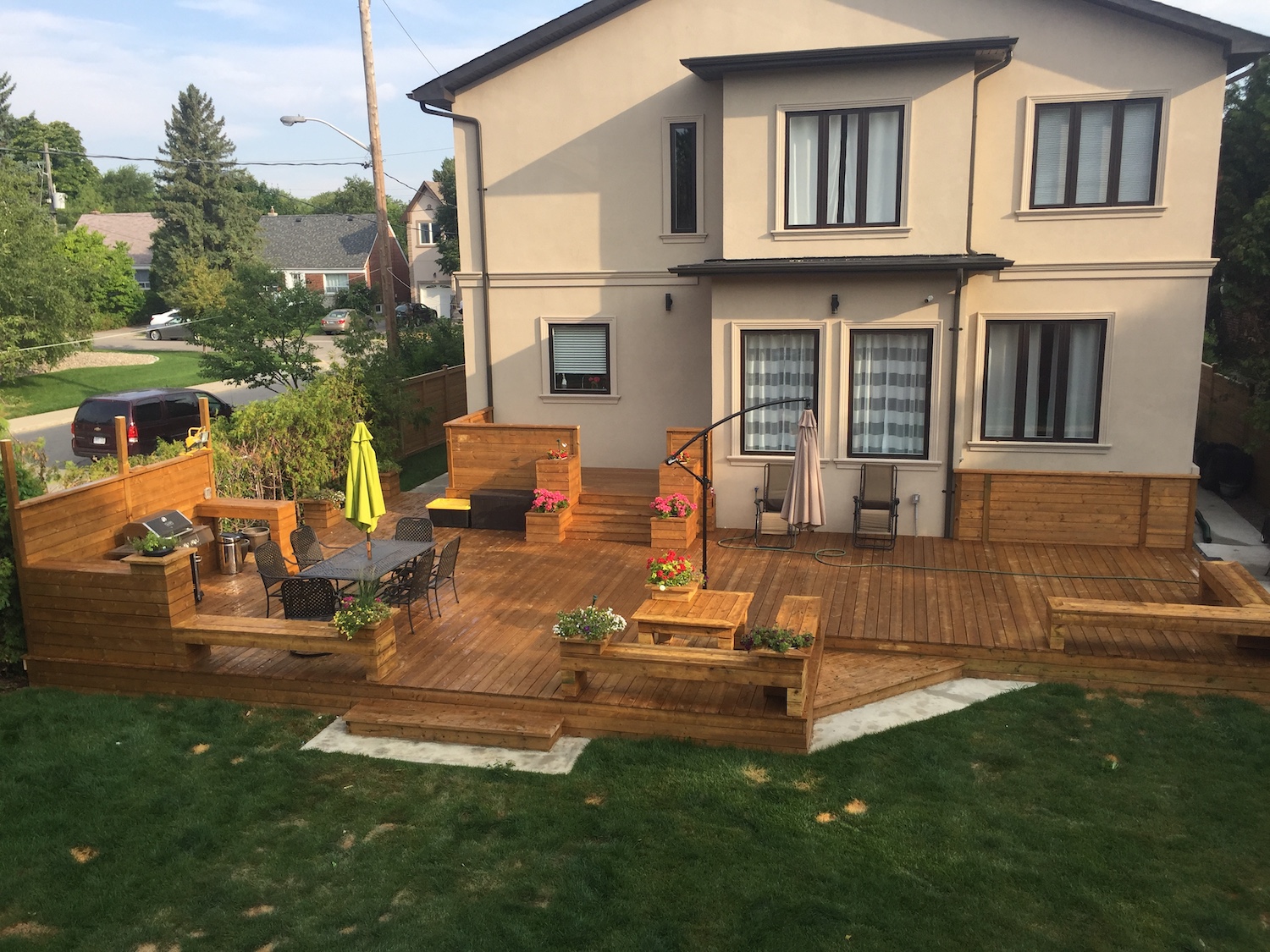
If you have been pricing a new cedar deck in the Greater Toronto Area this year, you have probably noticed the numbers are all over the map. One contractor quotes $38 per square foot, the next says $65, and neither explains why. At Deck Master Inc., we have been building cedar decks across Toronto and the GTA since 2004, and we believe an informed homeowner makes a better client. This guide breaks down realistic 2026 cedar deck pricing in Canadian dollars, what actually drives the cost, how cedar compares to pressure-treated and composite, and how to protect the investment through our brutal freeze-thaw winters.
What a cedar deck really costs in the GTA in 2026
For 2026, a professionally built western red cedar deck in Toronto and the surrounding GTA typically runs $40 to $60 per square foot installed. That figure includes materials, labour, fasteners, and standard footings to code. A simple ground-level 200 sq ft platform in Scarborough might land near the bottom of that range; a raised, wraparound deck in Oakville with a pergola and glass railings can push past it.
The reason for the spread is that "cedar deck" describes dozens of different builds. Grade of lumber, deck height, railing style, and site access all move the final number substantially. Below is where the money actually goes.
Grade and availability of western red cedar
Not all cedar is equal. Clear or "Architect Knot" grades of western red cedar carry tight grain, fewer knots, and better stability, and they cost noticeably more than knotty or standard grades. Cedar is milled primarily in British Columbia, so supply and freight to Ontario influence pricing year to year. In 2026 we are seeing firm but stable cedar pricing, and we recommend locking in material early in the season before summer demand peaks. The Western Red Cedar Lumber Association is a solid reference for understanding grades before you buy.
Deck size, height, and structural work
Cost per square foot is not flat. Larger decks spread fixed costs like permits and mobilization over more area, which can lower the per-foot rate. Height works the other way: a deck more than 600 mm off the ground triggers guardrail requirements under the Ontario Building Code, and elevated decks need taller posts, more bracing, and often engineered footings. A walkout over a basement in Vaughan is a very different job from a patio-level deck in Etobicoke.
Railings, stairs, and features
Railings are frequently the single biggest variable. A basic cedar picket rail is economical; aluminum or tempered-glass railing systems can add thousands. Stairs, built-in benches, planters, privacy screens, and lighting all add labour and material. If you want to see how these choices play out, our project gallery shows real GTA builds at different price points, and our deck cost calculator lets you test scenarios before you call.
Cedar vs pressure-treated vs composite
Cedar is not automatically the right answer for every backyard. Here is an honest side-by-side of the three materials we install most often, with 2026 GTA installed pricing.
| Decking material | 2026 installed cost per sq ft | Lifespan (GTA) | Maintenance |
|---|---|---|---|
| Western red cedar | $40–$60 | 15–25 years | Clean and re-stain or seal every 2–3 years |
| Pressure-treated wood | $25–$40 | 10–15 years | Wash yearly; stain every 2–3 years once dry |
| Capped composite | $55–$85 | 25–30+ years | Occasional soap-and-water wash; no staining |
Pressure-treated lumber is the budget choice and structurally sound, but it tends to warp, cup, and check as it dries through our freeze-thaw cycles, and it never quite loses its greenish tint. Composite costs more upfront but eliminates staining entirely, which is why many homeowners now weigh it against wood. We cover that trade-off in depth in our guide on composite vs wood decks in the GTA, and if maintenance-free is your priority, our composite decking service is worth a look.
Why GTA homeowners still choose cedar
Despite the maintenance, cedar remains one of our most-requested materials, and for good reason. It is naturally rich in oils that resist rot and insects without chemical treatment. The colour is genuinely beautiful, ranging from warm honey to deep amber, and it ages to a refined silver-grey if left unsealed. Cedar is soft, light, and stable, which means it works cleanly, holds fasteners well, and stays cool underfoot on a hot July afternoon better than dark composite boards. And then there is the smell, that unmistakable aromatic cedar scent that no synthetic board reproduces. For the building science behind wood's durability and dimensional stability, the Canadian Wood Council is an authoritative source.
The ongoing cost of owning a cedar deck
Honesty matters here, because cedar's sticker price is not its full cost. To keep it looking its best and to protect it from Ontario's moisture and UV, a cedar deck should be cleaned and re-stained or sealed every two to three years. Budget roughly $2 to $4 per square foot if you hire it out, less if you do it yourself. Skip this and cedar will not fail structurally for years, but it greys, the surface roughens, and end grain can start to check. We walk homeowners through product and timing choices in our deck staining and finishing guide for Ontario.
How cedar holds up to freeze-thaw
The GTA sees dozens of freeze-thaw swings each winter, and water is the enemy in every one of them. Moisture soaks into wood, freezes, expands, and works joints loose over time. This is exactly why proper construction matters more than the lumber grade: correctly sized footings below the frost line, hidden or hot-dipped galvanized and stainless fasteners, adequate joist spacing, and gapping that lets boards breathe and drain. A well-built cedar deck in our climate reliably delivers 15 to 25 years. A poorly built one can loosen and cup in five.
Protecting your investment
Two decades of building across the GTA has taught us that the difference between a deck that lasts and one that fails is rarely the material, it is the workmanship and the follow-through. Choose an installer who pulls permits, builds to the Ontario Building Code, and carries proper coverage. As a WSIB-insured, three-time HomeStars "Best of" winner (2022, 2024, and 2025) and a Home Depot Pro partner, we stake our 5.0 rating on exactly that. Seal the deck on schedule, keep debris out of the gaps, and re-coat before the finish fully wears, and a cedar deck will reward you for decades. You can explore all our build options on our cedar deck page.
Frequently asked questions
Is cedar or composite cheaper in the long run?
Cedar is cheaper to build but costs more to maintain, since staining every two to three years adds up. Composite costs more upfront yet needs almost no maintenance and lasts longer. Over 25 years the total cost often lands close; the real deciding factor is whether you enjoy the look and upkeep of real wood or prefer to never pick up a brush.
How long does a cedar deck last in Toronto?
A properly built and regularly sealed western red cedar deck typically lasts 15 to 25 years in the GTA. Lifespan depends heavily on drainage, fastener quality, and how consistently it is maintained through our freeze-thaw winters.
Do I need a permit for a deck in the GTA?
Usually yes. Most GTA municipalities require a building permit once a deck exceeds a certain height or area, and elevated decks almost always do. We handle permit drawings and applications as part of our service so the build is fully code-compliant.
When is the best time to build a cedar deck?
Spring and early summer are busiest, so booking in late winter often means better pricing and material availability. That said, we build through the fall, and cooler, drier autumn weather is actually excellent for staining a new cedar deck.
Ready for a straight, no-pressure quote on your cedar deck? Contact Deck Master Inc. or call us at 647-349-6585, and let 20+ years of GTA deck-building experience go to work for your backyard.