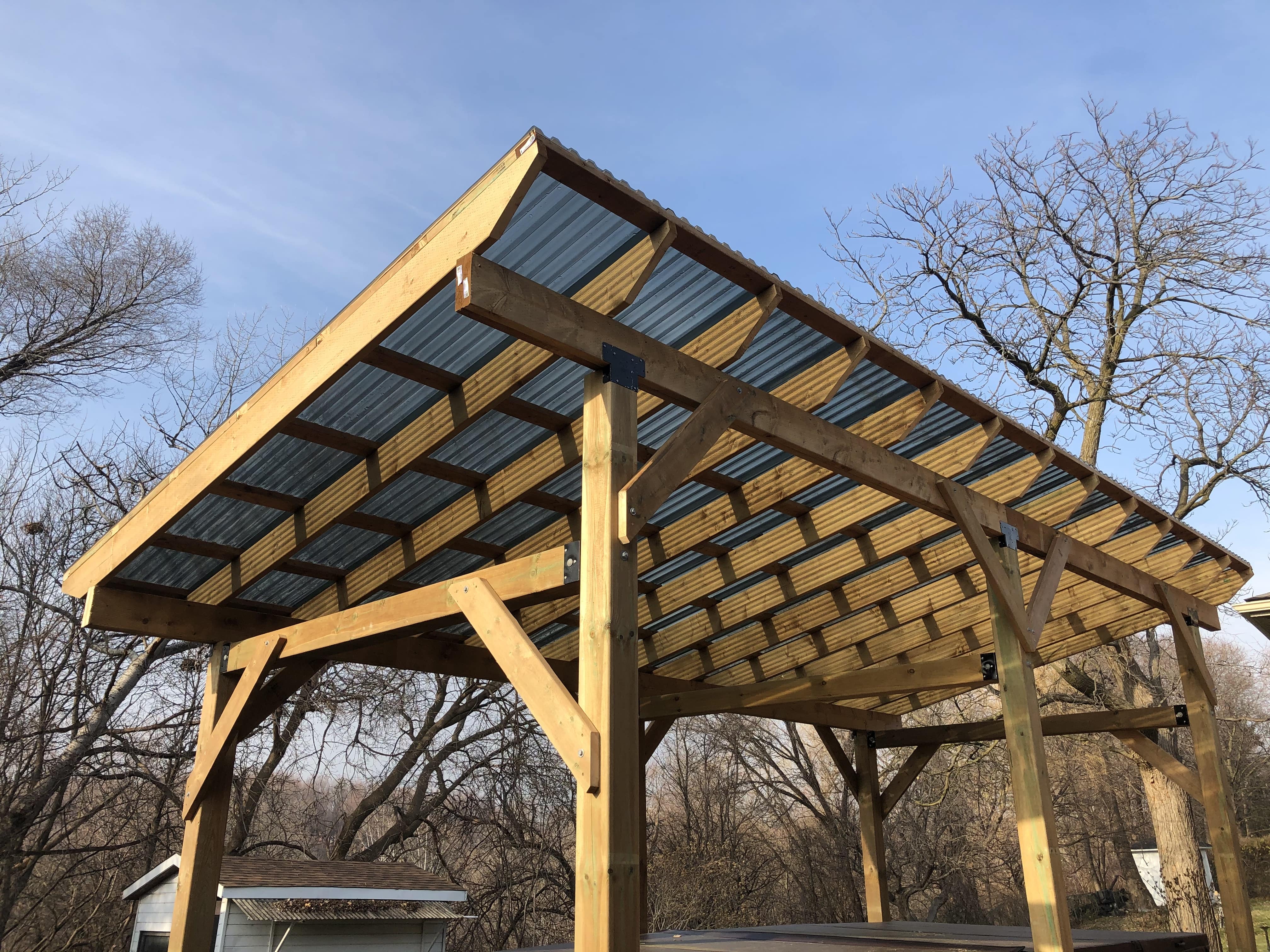
Choosing a pergola for a GTA backyard comes down to a trade-off most homeowners underestimate: the warmth and character of natural wood versus the low-maintenance engineering of modern aluminum. Both perform well through Toronto's freeze-thaw winters when they're built right, but they suit very different owners, budgets, and outdoor lifestyles. Here's how aluminum, cedar, pressure-treated wood, and vinyl/composite actually compare in 2026, and a simple framework for picking the one that fits your yard.
The four pergola materials, at a glance
After building pergolas across Toronto and the GTA since 2004, we've narrowed the practical choices to four. Each has a clear personality once you look past the showroom photos.
Aluminum
Powder-coated aluminum is the fastest-growing choice in the GTA, and for good reason. It doesn't rot, warp, crack, or feed carpenter ants, and the finish shrugs off road salt and UV. Aluminum is also the only material that supports louvered (adjustable) roofs and full motorization, so it's the platform behind almost every "smart" outdoor room we install.
Cedar
Western red cedar is the timber people fall in love with. It's naturally rot- and insect-resistant, it smells wonderful, and a heavy-timber cedar structure has a warmth no metal can copy. It's the choice when the pergola is meant to look like it grew out of the garden rather than arrived on a truck.
Pressure-treated wood
Pressure-treated (PT) spruce or pine is the budget workhorse. The chemical treatment resists rot and insects, and the price is the lowest of the four. The catch is movement: PT lumber is usually installed wet, so it checks, twists, and needs re-staining as it dries and weathers.
Vinyl and composite
Vinyl-wrapped and fibreglass/composite pergolas aim for the wood look without the upkeep. Quality varies enormously. Better systems, like those built on composite building products, hold colour well; cheaper vinyl can chalk and grow brittle in our cold.
Cost, maintenance, and lifespan compared
These are installed 2026 CAD ranges for a typical 12' x 12' backyard pergola in the GTA. Final pricing depends on span, footings, and features, but the relationships between materials hold steady.
| Pergola material | Upfront cost | Maintenance | Lifespan | Best for |
|---|---|---|---|---|
| Aluminum (incl. louvered/motorized) | $12,000–$35,000+ | Very low — rinse occasionally | 30+ years | Low-maintenance, all-weather smart living space |
| Cedar | $8,000–$18,000 | Moderate — seal/stain every 2–3 years | 15–25 years | Natural warmth and custom character |
| Pressure-treated wood | $5,000–$10,000 | Higher — stain yearly at first | 10–15 years | Budget builds and shorter-term plans |
| Vinyl / fibreglass composite | $10,000–$20,000 | Low — occasional wash | 20–30 years | Wood look with minimal upkeep |
Durability in a freeze-thaw climate
Toronto swings from +30°C summers to deep-freeze January, often crossing the freezing point dozens of times each winter. That freeze-thaw cycling is what actually destroys backyard structures, and it treats each material differently.
Water is the enemy. It seeps into wood, freezes, expands, and pries the fibres apart — which is why cedar and PT need finishes that keep moisture out. The Canadian Wood Council is a good reference on how species and treatment affect durability in our climate. Aluminum sidesteps the whole problem: it doesn't absorb water, so freeze-thaw simply doesn't touch it. Vinyl and composite resist moisture too, though low-grade vinyl can turn brittle and crack in extreme cold. Whatever the material, the footings matter as much as the posts — proper below-frost-line footings keep the whole structure from heaving.
Snow load: the GTA factor people forget
A pergola roof has to carry GTA snow, and a solid-roof or louvered pergola carries far more than an open-slat one. Ontario Building Code specified snow loads mean a covered aluminum roof must be engineered for the weight — this is exactly where cheap online kits fail. Louvered aluminum roofs solve it elegantly: open the blades before a storm and snow falls through, or let a motorized system respond automatically. Heavy-timber cedar spans big distances beautifully but needs correctly sized beams; PT lumber sags soonest under repeated snow if it's under-built. This is engineering, not guesswork, and it's the part we won't cut corners on.
Louvered and motorized aluminum vs. a cedar timber pergola
This is the real decision for most GTA homeowners in 2026: a high-tech aluminum room or a warm natural retreat.
The smart aluminum outdoor room
A louvered aluminum pergola turns a patio into a genuine three-season space. Rotating roof blades let you dial in sun or full shade, close tight against rain, and a rain sensor can shut them for you automatically. Add integrated LED lighting, retractable side screens, and heaters, and you have an outdoor living room you'll use from April to November. If you entertain, work from the yard, or just want weather you control, this is the pick.
The natural cedar retreat
A cedar timber pergola does something different — it feels calm, organic, and rooted in the landscape. Paired with climbing vines or a set of privacy screens, it creates a shaded garden getaway with real craftsmanship on display. You trade the tech and the sealed-roof weather protection for warmth, scent, and a look that ages gracefully.
Attached vs. freestanding
An attached pergola ties into your house wall, extending the roofline over a patio or off a deck — it feels like an extension of the home and is efficient for narrow yards. A freestanding pergola can go anywhere: over a hot tub, a garden dining zone, or a poolside lounge. Attached structures need careful flashing and ledger detailing to keep water out of the wall; freestanding ones need four solid footings. Both work in aluminum or wood.
A simple recommendation framework
- Want the lowest maintenance and smart features? Choose aluminum, and go louvered if you want weather control.
- Want natural warmth and custom character? Choose cedar.
- On a tight budget or short-term plan? Pressure-treated wood gets you shade for less.
- Want the wood look without the upkeep? Choose vinyl/composite.
For a broader walk-through of the build process, permits, and timelines, see our Toronto pergola installation guide, or browse finished projects in our gallery.
Frequently asked questions
Are aluminum pergolas worth the extra cost in the GTA?
If you value low maintenance and want to use the space in more weather, yes. Over 20 years, an aluminum pergola typically costs less to own than wood once you factor in staining, sealing, and eventual board replacement — and a louvered model adds rain protection wood simply can't match.
Does a cedar pergola need a lot of upkeep?
Plan on cleaning and re-sealing or staining every two to three years to protect it from GTA moisture and UV. Left unfinished, cedar weathers to a silvery grey — attractive to some, but the fibres degrade faster without a finish.
Can a pergola handle Toronto snow loads?
A properly engineered one can. Open-slat pergolas shed most snow, and louvered aluminum roofs open to let snow pass or close for rain. The key is correct beam sizing and below-frost-line footings — an under-built kit is the usual failure point.
Which lasts longer, aluminum or wood?
Aluminum, comfortably — 30-plus years with almost no upkeep, versus 10–15 for pressure-treated and 15–25 for well-maintained cedar. Composite sits in between at 20–30 years.
Not sure which material fits your yard, budget, and how you'll actually use the space? Deck Master Inc. has designed and built GTA pergolas since 2004 — WSIB-insured, HomeStars "Best of" winners with a 5.0 rating. Request your free consultation or call 647-349-6585, and we'll help you choose with confidence.